Retaining Wall Contractor
Seattle, Washington
Vasa Construction LLC is a retaining wall contractor in Seattle, Washington, building segmental block, poured concrete, timber, and boulder walls across the Puget Sound region. Half the lots in this city sit on a grade that would rather not stay where it is. Nearly every failed wall we are called out to replace failed for the same reason, water with nowhere to go, so our builds start with a compacted base, drainage rock, filter fabric, and a perforated drain line routed to daylight. Our crews have worked these slopes for 25+ years. Get your free retaining wall estimate today!
Explore Our Retaining Wall Services
We design for the soil and the water behind the wall, not just the face you see. That means a compacted base, free-draining backfill, filter fabric to stop fines migrating, and a drain line routed to daylight, on every build regardless of height. Engineering and permitting get coordinated whenever the slope or the surcharge calls for it.
Segmental Block Retaining Walls
Engineered block systems handle most residential grade changes efficiently. Interlocking units, geogrid reinforcement into the slope, and a compacted base give substantial holding capacity with a finished face that needs no maintenance.
Poured Concrete Walls
Reinforced concrete suits tall walls, tight property lines, and situations carrying real surcharge from driveways or structures above. Footings, rebar schedules, and drainage details follow engineered drawings rather than rules of thumb.
Timber and Boulder Walls
Treated timber and quarried rock both suit informal landscapes and gentler grade changes. Boulder walls in particular blend into planted slopes while offering excellent drainage through the gaps between individual stones.
Drainage and Backfill Systems
Everything behind the wall does the real work. Free-draining rock, filter fabric to prevent fines migration, and a perforated pipe routed to daylight keep hydrostatic pressure from building against the structure.
Engineered and Permitted Walls
Height, slope above, and nearby loads dictate when stamped plans are required. We coordinate geotechnical input, structural design, and the permit process so the finished wall passes inspection without redesign.
Retaining Wall Repair and Replacement
Leaning, bulging, and cracked walls are telling you something specific. Assessment determines whether drainage correction and partial rebuilding will hold, or whether the wall needs replacing before it takes the slope with it.
This is paragraph text
This is paragraph text
Retaining Wall Materials
We build in segmental block, poured concrete, treated timber, and quarried boulder. Height, the load sitting above the wall, and how you want the finished yard to look together decide which one belongs on your property.
Segmental Block
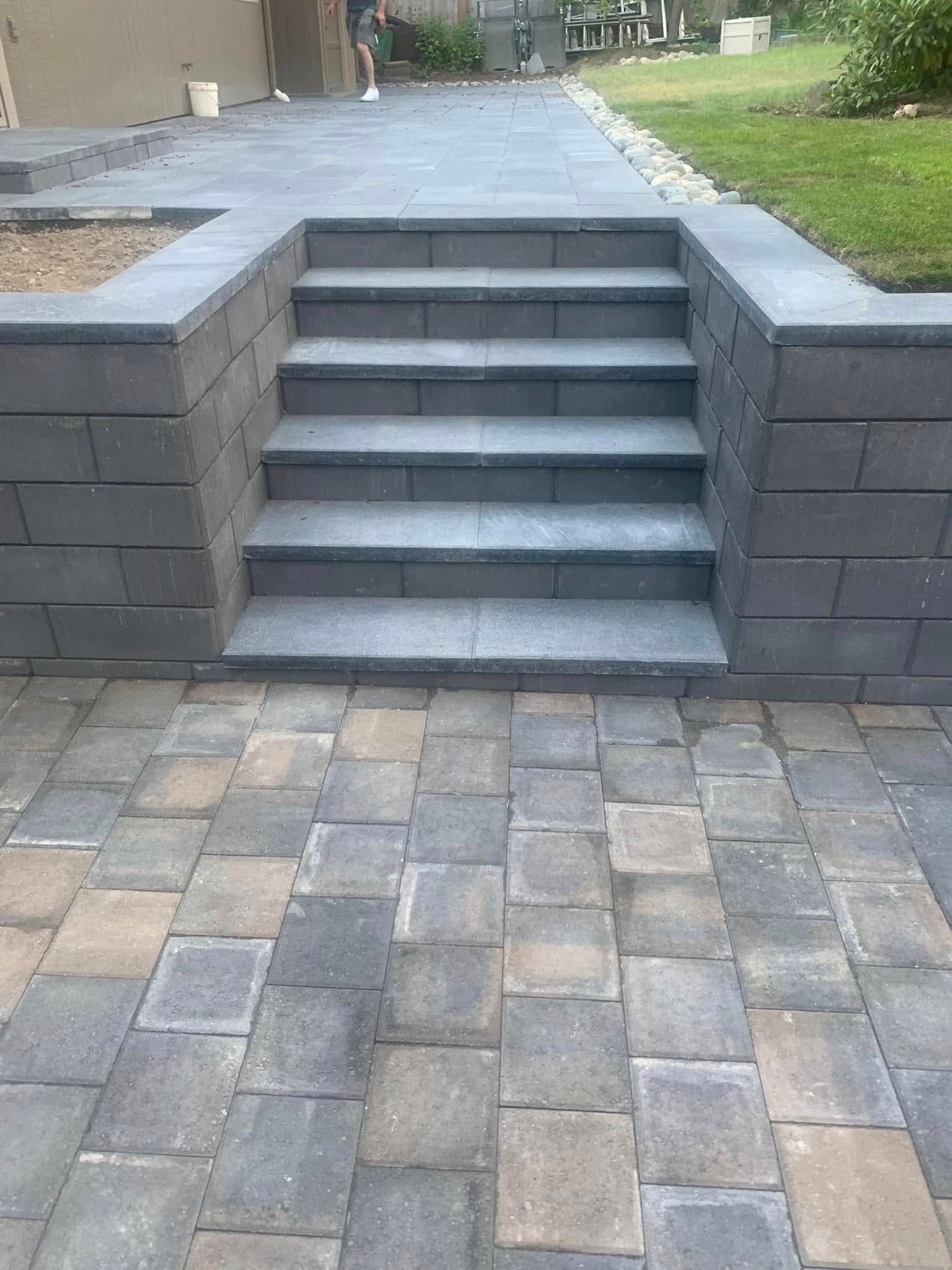
The most common residential choice and the most forgiving to build correctly. Interlocking units set back as they rise, geogrid ties the wall into the slope, and the face never needs finishing or sealing.
Poured Concrete
The answer for height, tight property lines, and any wall carrying a driveway or structure above. Rebar and footing dimensions come from engineered drawings, and the finished face can be board-formed or veneered.
Treated Timber
The lowest initial cost and the shortest life in this climate, typically around 20 years. It suits informal landscapes and modest grade changes where replacement later is an acceptable trade for spending less now.
Quarried Boulder
Large rock reads as landscape rather than structure and drains freely through the gaps between stones. It suits naturalized slopes and planted terraces, and needs machine access to place the pieces.
5
Benefits
Benefits
Why Seattle Chooses Vasa Construction LLC
The Vasa Experience comes down to straight answers, clean sites, details that hold, and the same crew from start to finish.
1
Straight Answers
You hear what the building needs and what it will cost before work starts, including the option nobody thought to ask about.
2
Clean Sites
Tarps go down, debris leaves in the truck daily, and magnets sweep the ground so nobody finds a stray fastener with a tire.
3
Details That Hold
The parts you never see, like flashing laps and fastener patterns, get done to spec, because those are what fail first.
4
Crews You Recognize
The same team starts and finishes your project, so you are never re-explaining the job to someone who arrived halfway through the week.
See What Our Customers Are Saying!
Protect Your Landscape With Strong Structural Support
Slopes are the reason so many properties here have a view and so few have flat ground worth using. A well-built wall settles that argument permanently, turning ground that only ever grew blackberries into a terrace, a patio, or somewhere a ball can actually be kicked. What makes it permanent stays completely hidden: the rock, the fabric, the pipe running out to daylight behind the face. Vasa Construction LLC builds for the water that arrives in Seattle, Washington, not just for the wall that photographs well on delivery day. Reach us through our contact page.
Frequently Asked Questions
When does a retaining wall require engineering?
Generally once it exceeds 4 feet in height, supports a slope or driveway above it, or sits near a structure. Local conditions and soil type can lower that threshold considerably.
Why do retaining walls fail?
Water, almost always. Without free-draining backfill and a functioning drain line, saturated soil pushes against the wall with far more force than the design anticipated, causing leaning, bulging, and eventual collapse.
What drainage does a retaining wall need?
Clean drainage rock behind the full height, filter fabric separating it from native soil, and a perforated pipe at the base routed to daylight or an approved discharge point well away from the wall.
Which material should I choose, block, concrete, or timber?
Block suits most residential walls and needs no finishing. Concrete handles height and heavy loads. Timber costs less initially but has the shortest life in this climate, typically 20 years or so.
How long does a properly built retaining wall last?
Segmental block and reinforced concrete commonly exceed 50 years with functioning drainage. Vasa Construction LLC builds to that standard on Seattle, Washington slopes rather than to minimum appearance.
How tall can a wall be without a permit?
Typically 4 feet measured from the bottom of the footing, provided nothing surcharges it from above. Terracing two shorter walls does not automatically avoid the requirement if the walls interact structurally.
Can a leaning wall be repaired, or must it be rebuilt?
It depends on the cause and the extent. Vasa Construction LLC assesses drainage, base condition, and movement at Seattle, Washington properties before recommending correction rather than full replacement.
How long does construction take?
Most residential walls take 3 to 10 days depending on length, height, and access. Excavation, base preparation, and drainage installation consume more of that time than setting the visible units does.